For parents raising a child between two worlds

Not stricter.Not softer.Clearer.

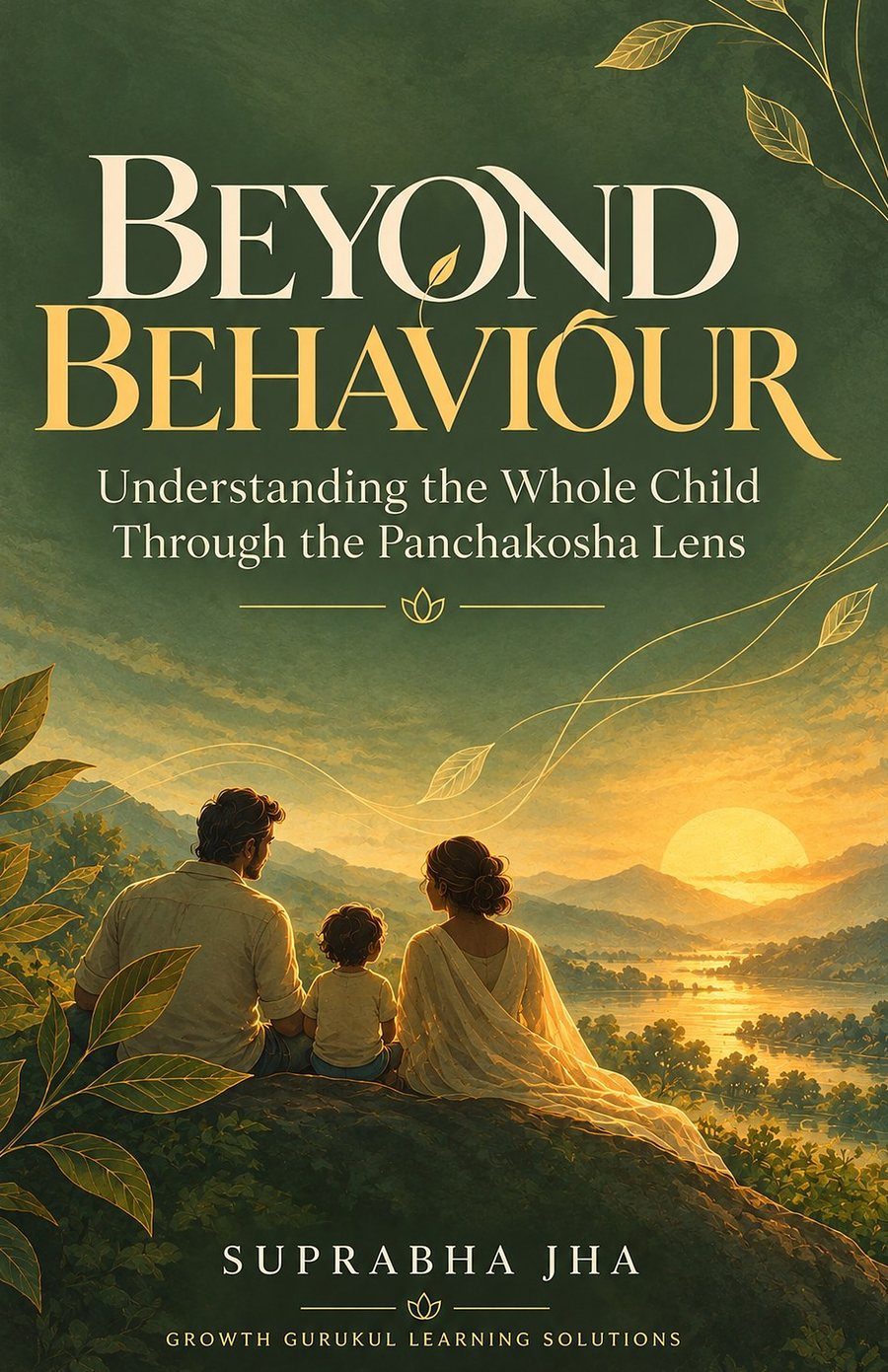
Beyond Behaviour book coverSuprabha Jha

By Suprabha Jha, educator and founder of Growth Gurukul
Book + toolkit + 3 bonuses

Raised one way, parenting in another? Beyond Behaviour shows you what is happening underneath your child's behaviour, so you can hold the boundary without losing the connection. In Pune, Dallas, Leicester or Melbourne.

Get the book · $9.99

Instant PDF + ePub, any countryToolkit + 3 bonuses free

  • See what's underneath “not listening”, meltdowns, screens and lies
  • Hold your boundaries, and your values, without shaming your child
  • Reach for 10 short tools in the hard moment, from a ten-second pause to C.A.L.M.
  • Read 17 short chapters, each ending with one practice for this week
Suprabha Jha

Suprabha Jha, educator and parent
Founder, Growth Gurukul Learning Solutions

The painting from the Beyond Behaviour cover: a father, mother and young child sitting on a rock, looking out over a river valley and hills towards the setting sun Direction Inner guide Inner world State Body
Beyond Behaviour book cover
The cover is the method. A parent and child looking at the whole landscape. The behaviour is only the part in front of you.

Which one sounds like you?

One book. Three kinds of homes.

Pick yours. The page will speak to it.

Why nothing has stuck

You were handed two playbooks. Neither was written for the child in front of you.

Playbook 1 · The way you were raised
“Papa only had to look at us.”
  • Obey
  • Don't answer back
  • Elders know best

Where it breaks: you get silence, not understanding.

“If I'm stricter, will I damage my child?”

Playbook 2 · The way Instagram parents
“Validate every feeling.”
  • Never raise your voice
  • Connect before you correct

Where it breaks: it feels kind, until nothing changes. And your in-laws have opinions.

“If I'm softer, will I become permissive?”

Playbook 1 · The way home says
“Respect your elders. Don't answer back.”
  • Touch Nani's feet
  • Do as you're told
  • Family first

Where it breaks: at school, the same child is taught to question everything, and to say so.

“Will I push my child away?”

Playbook 2 · The way school and friends say
“Speak up. It's your choice.”
  • Sleepovers
  • Opinions
  • Your feelings are valid

Where it breaks: your family's values start to feel optional, and Dadi asks on the Sunday call why he talks back.

“Will my child do well, and lose who we are?”

Playbook 1 · The way you were raised
“Because I said so.”
  • Time-outs
  • Grounding
  • Count to three

Where it breaks: you get compliance while you're watching, and not much after.

“When I'm firm, I sound like my parents.”

Playbook 2 · The way the internet parents
“Name the feeling. Hold space.”
  • Gentle scripts
  • No punishments
  • Validate first

Where it breaks: it is warm, but the hitting, the stalling and the screen fights don't stop.

“When I'm gentle, nothing changes.”

The third way · Beyond Behaviour

Understanding and boundaries, together. It works in any home.

Understand deeplyLook at the whole child before you decide what a behaviour means.
Hold the boundaryCorrect the action without reducing your child to it.
Build the capacityPatience, focus, honesty and stopping are skills, and skills can be practised.
Hand the guidance inwardFrom your rules, to their reasons, to their own judgement.
Get the book · $9.99

Instant downloadStart with Chapter 1 tonight

The lens at the heart of the book

Your child is the whole landscape. The behaviour is just the part in front of you.

  • Body · AnnaHungry, tired, unwell, overstimulated?
  • State · PrāṇaWired, flat, rushed, flooded?
  • Inner world · ManasWhat is she feeling, fearing or wanting?
  • Inner guide · VijñānaWhat does he understand, and what can he actually choose?
  • Direction · ĀnandaWhat gives her meaning, belonging, a sense of enough?

Before you decide what a behaviour means, look in five places. The book calls it the Thirty-Second Kosha Scan, and it works on a school run in any city.

Where it comes from. Panchakosha, the five layers of a person, comes from the Taittirīya Upaniṣad, one of India's oldest texts. Many yoga teachers know it as the five koshas. The book turns it into a practical lens, in plain English. No belief, ritual or Sanskrit needed.

For Indian homes: this is wisdom you inherited, made usable on an ordinary Tuesday.

For families abroad: a way to pass on the meaning behind your values, not just the rules.

For everyone else: think of it as a map of the whole child, from the tradition that gave the world yoga.

Try the Kosha Scan · 30 seconds

Pick the moment you had today. See what it might be telling you.

In the book, a scan is not a sentence. It separates your child from the behaviour, and the behaviour from your first reading of it. Here is a short taste.

What you saw: 7:44 a.m. Shoes still off, eight minutes to leave, and this is the fifth reminder.

The verdict that jumps out

“He just doesn't listen.”

Five places to look instead

  1. BodyHas he eaten? Slept enough? A slow body makes a slow morning.
  2. StateHe is still in play mode. Switching gears costs more than it looks.
  3. Inner worldAbsorbed in something, he may not have truly heard the first call.
  4. Inner guideHe may have learned that the real instruction is the fifth one.
  5. DirectionWho is practising remembering here: him, or me?
Try this tomorrow

One less reminder

Say it once, close by, at his level. Then follow through instead of repeating.

Chapter 7 · Toolkit p. 18

What you saw: 4:10 p.m. The biscuit broke in half. Now she is on the floor, screaming.

The verdict that jumps out

“She's being so dramatic.”

Five places to look instead

  1. BodyHungry and tired after a long school day.
  2. StateHer cup was already full. The biscuit was the last drop.
  3. Inner worldA feeling far bigger than her words for it.
  4. Inner guideNo child can reason while flooded. Neither can we.
  5. DirectionShe needs your steadiness to borrow. The lesson can wait.
Try this in the moment

The Calm-First Rule · C.A.L.M.

Contain · Attune · Lower · Move forward

Chapter 6 · Toolkit p. 17

What you saw: 8 p.m. “Five more minutes.” For the third time tonight.

The verdict that jumps out

“He's addicted to that thing.”

Five places to look instead

  1. BodyTired eyes, a wired body, the end of a long day.
  2. StateScreens are built to be hard to leave. Leaving feels like losing.
  3. Inner worldMid-level, mid-episode, in the middle of something that matters to him.
  4. Inner guideStopping something enjoyable is a skill, and it is still growing.
  5. DirectionWhat could he practise away from the fight?
Try this for a week

Scan one pattern, not every problem

Watch only this moment for seven days. Don't fix it yet. Look for the pattern underneath.

Chapter 5 · Toolkit p. 12

What you saw: 8:45 p.m. A glass in pieces on the floor. “I didn't do it.”

The verdict that jumps out

“She's lying again.”

Five places to look instead

  1. BodyA fright: the crash, the racing heart.
  2. StateFear arrived before thinking did.
  3. Inner worldScared of your face, your voice, of letting you down.
  4. Inner guideShe knows lying is wrong. In that second, fear won.
  5. DirectionWhat repair would make this more right?
Try this when things are complicated

The Three Questions

Telling me · Still held · Needs to grow

Toolkit p. 20 · later, the Choice Replay, p. 31

What you saw: The Sunday video call. Dadi, in India, asks about school. An eye-roll, then: “Why do I have to say namaste on camera?”

The verdict that jumps out

“So disrespectful.”

Five places to look instead

  1. BodyEnd of the weekend, tired, and the call cuts into play.
  2. StateSwitching language and manners on camera takes real effort.
  3. Inner worldMaybe embarrassed. Maybe unsure what the words or the custom mean.
  4. Inner guideShe was given the rule, but never the reason behind it.
  5. DirectionWhat would make this custom hers, not just ours?
Try this before the next call

From rule to reason

Tell her the why behind one custom, in her words. Then let her choose how she shows it.

Chapters 12–14 · Viveka

What you saw: Saturday. A new toy on Thursday. Today: “Everyone else has one.”

The verdict that jumps out

“She's so spoilt.”

Five places to look instead

  1. BodyBored and restless, in need of something real to do.
  2. StateChasing the next good feeling, fast.
  3. Inner worldComparing herself with a friend, and feeling less.
  4. Inner guideShe hasn't learned yet that more doesn't mean happier.
  5. DirectionWhat does “enough” look like in our home?
Try this when wanting takes over

The Enoughness Pause

Already have · Actually wanting · Wait · What remains

Chapter 16 · Toolkit p. 36

These are possibilities to notice, not a diagnosis. The book shows you how to look at your own child, one layer at a time.

Get the book · $9.99

All 10 tools, with the full Kosha Scan in Chapter 5

Look inside

Written for a Tuesday evening, not a seminar.

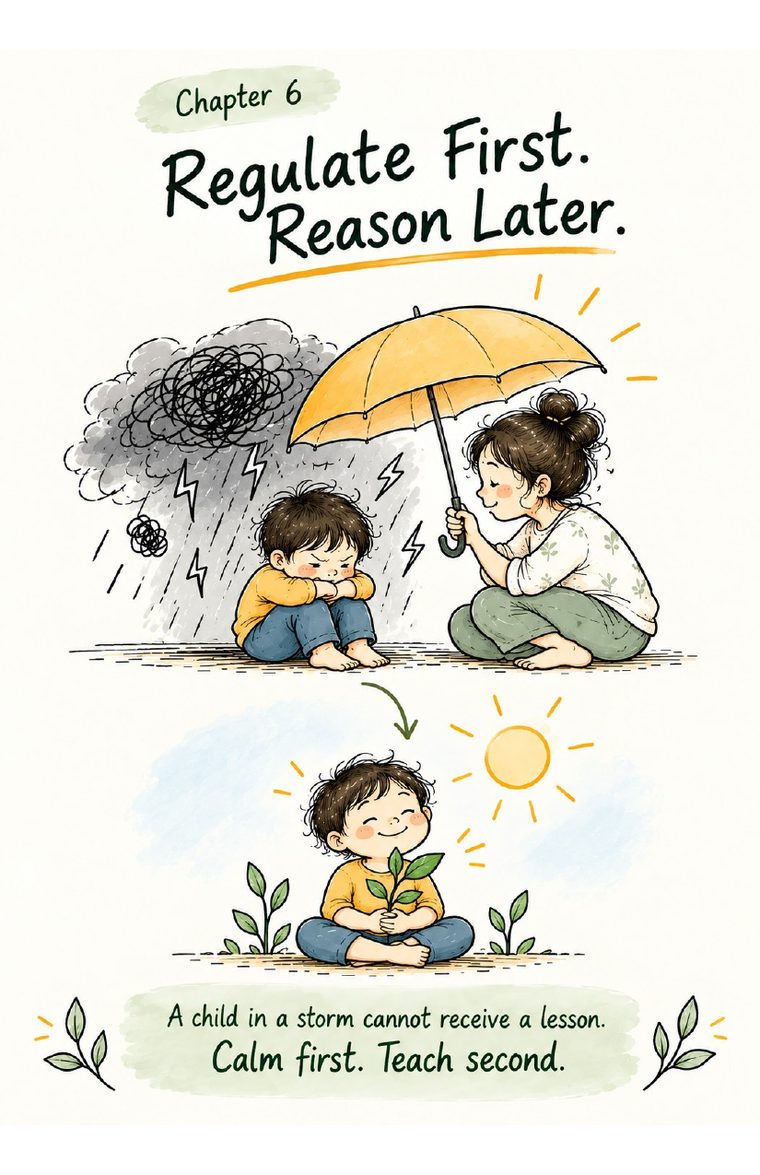
Chapter 6 illustration: a parent shelters an upset child under an umbrella in a storm. Caption: A child in a storm cannot receive a lesson. Calm first, teach second.
Chapter 6 · Regulate first, reason laterEvery chapter opens with a real family moment.
Behaviour is a clue, not a verdict.
Chapter 1 · Your Child Is Not Their Behaviour
17short chapters, about 15 minutes each
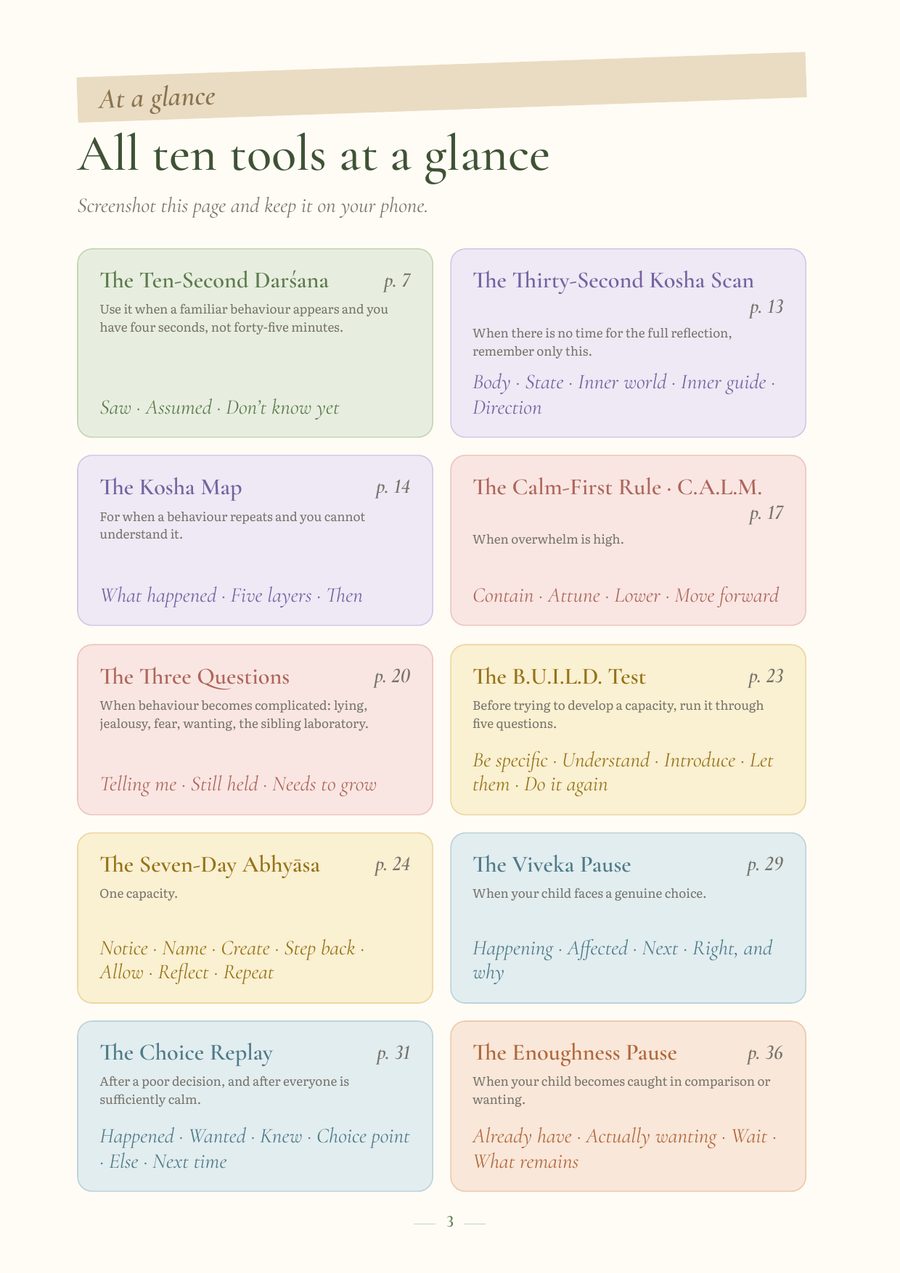
10tools for the hard moment, all on one page
Toolkit page: All ten tools at a glance
All ten tools on one pageScreenshot it and keep it on your phone.
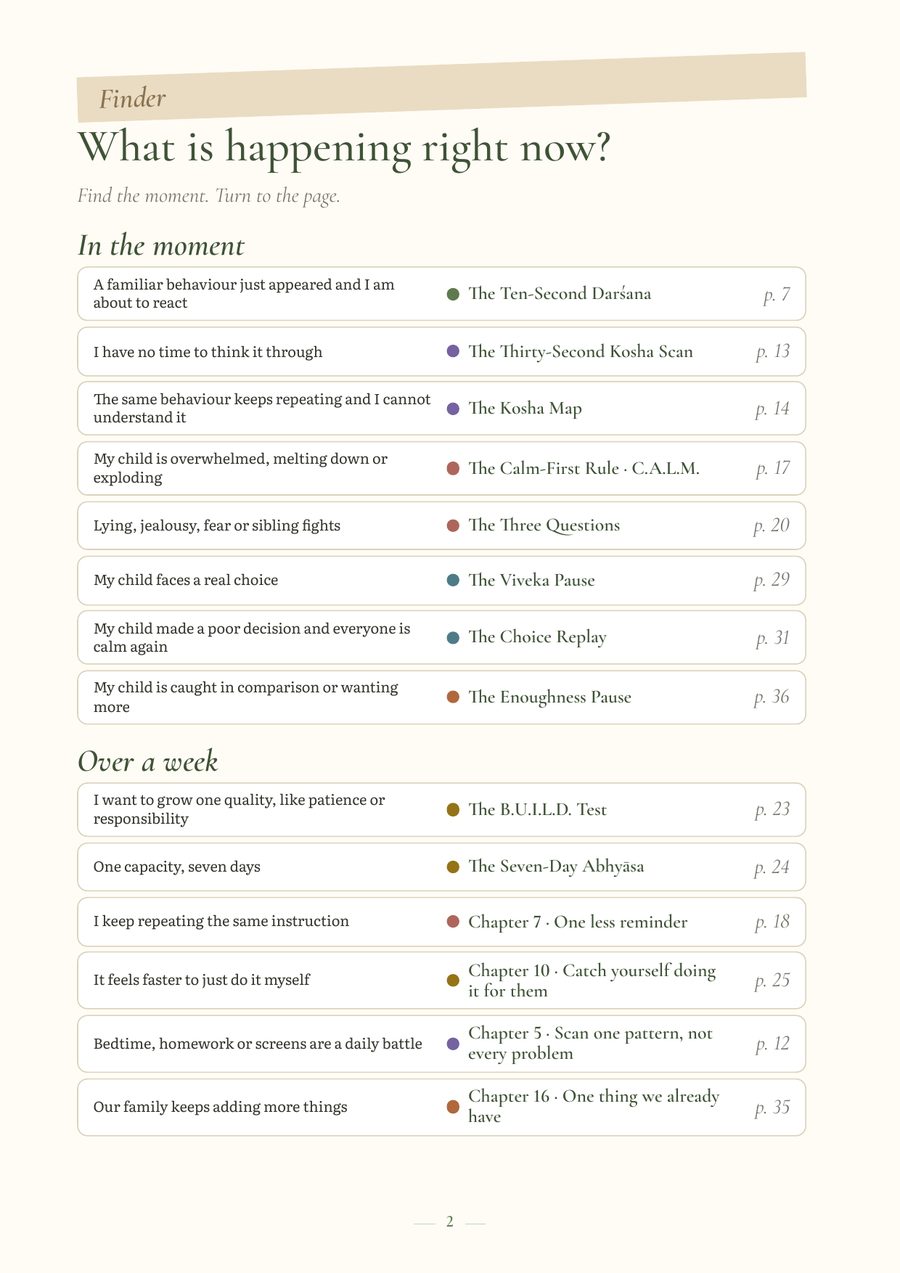
Toolkit page: Finder, What is happening right now?
The FinderFind the moment. Turn to the page.
Watching a child take seven minutes to do something you could complete in nineteen seconds is one of parenting's great spiritual tests.
Chapter 7 · The Rescue Trap
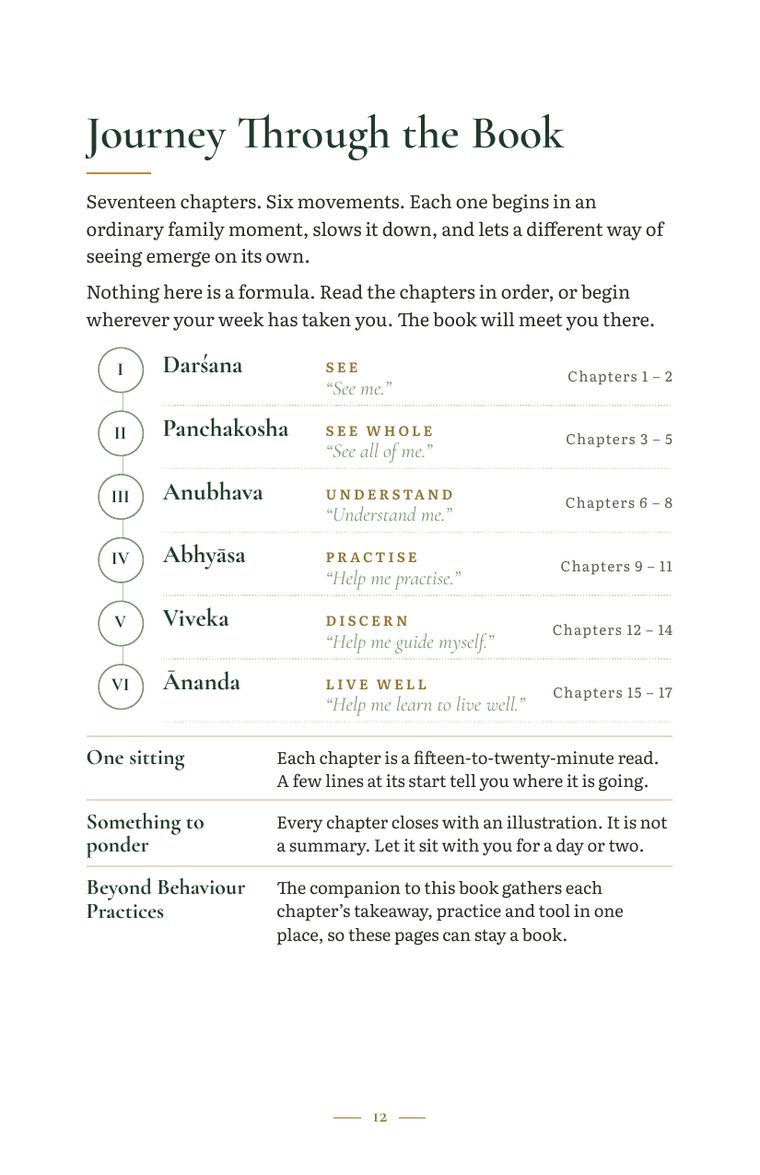
Contents page: Journey Through the Book, six movements
Six movementsFrom seeing your child clearly to wisdom that grows inside them.
  1. I · Ch 1–2DarśanaSee. Look beyond the behaviour.
  2. II · Ch 3–5PanchakoshaSee whole. Five layers, one child.
  3. III · Ch 6–8AnubhavaUnderstand. Meltdowns, listening, screens.
  4. IV · Ch 9–11AbhyāsaPractise. Build what you want to see.
  5. V · Ch 12–14VivekaDiscern. From your rules to their compass.
  6. VI · Ch 15–17ĀnandaLive well. Learning what is enough.
Portrait of Suprabha Jha

Who wrote it

An educator who has spent nearly two decades with children, teachers and parents.

Suprabha Jha founded Growth Gurukul Learning Solutions, which brings Panchakosha-based curriculum and teacher development to schools across India, and Three Dimensions Learning Centre, a Panchakosha-based preschool. The ideas in this book are part of an ordinary school day there.

  • Founder, Growth Gurukul
  • Indian Legends Award
  • School Leader Coach, IIT Delhi & Edu-Excellence
  • Visharad, Mohan Veena
  • Yoga & Mudra practitioner

“For years, a child borrows our steadiness, our judgement, even our way of making sense of the world. Parenting is the slow, almost invisible work of returning each of these to them as their own.”From Beyond Behaviour

Everything you get · by email, anywhere in the world

One book. A toolkit. Three gifts from Suprabha.

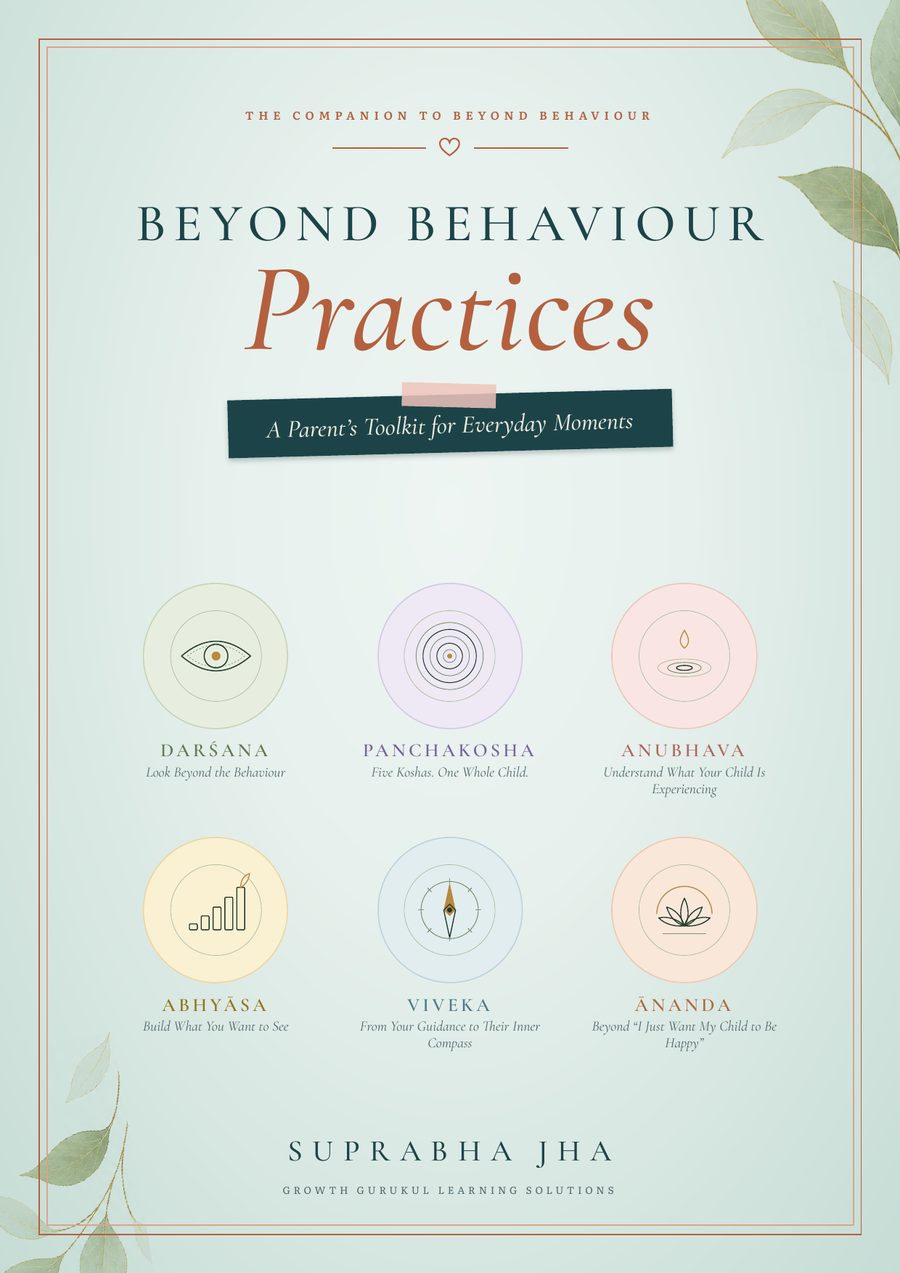
Beyond Behaviour book cover Beyond Behaviour Practices toolkit cover
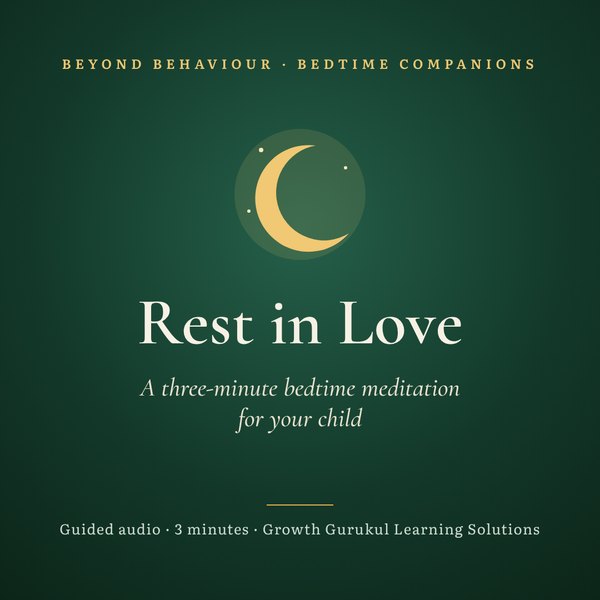
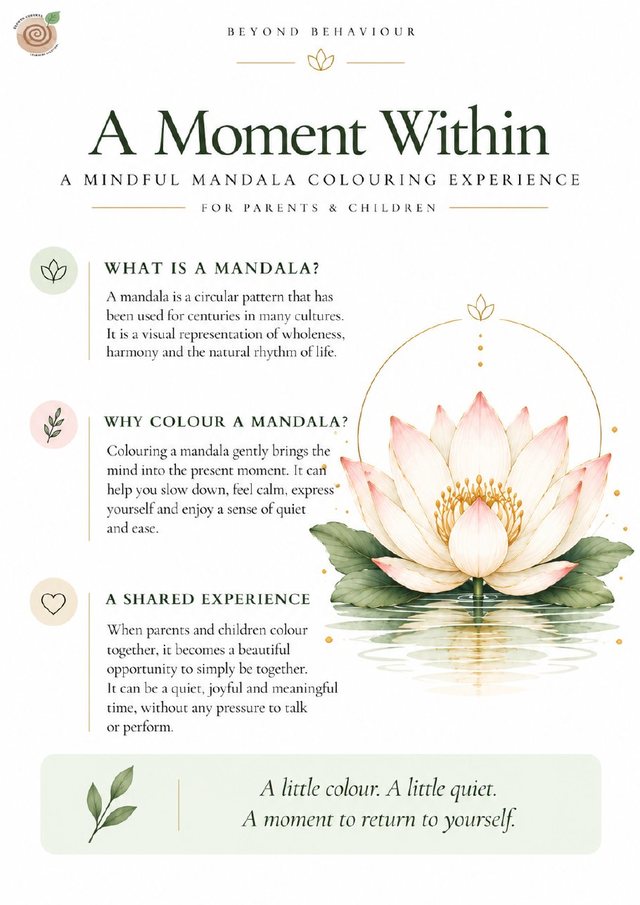
Bedtime Companions guided audio covers A Moment Within mandala colouring Peek-a-Heart printable card game
  • Beyond Behaviour, digital edition17 chapters · 10 tools · PDF + ePub
    Included
  • Beyond Behaviour Practices toolkitA take-with-you page for every chapter, the Finder, trackers, fridge cards · print, fillable, ePub
    Free
  • Bonus 1 · Bedtime CompanionsTwo guided audios: one for your child, one for you
    Free
  • Bonus 2 · A Moment WithinMandala colouring for parent and child
    Free
  • Bonus 3 · Peek-a-Heart!A 10-card empathy game to print and play
    Free

Book, toolkit and 3 bonuses, all for

$9.99

Send me everything · $9.99

Secure checkout. Price in US dollars (USD). Files arrive by email within minutes from suprabha@growthgurukullearning.com, whatever your time zone.

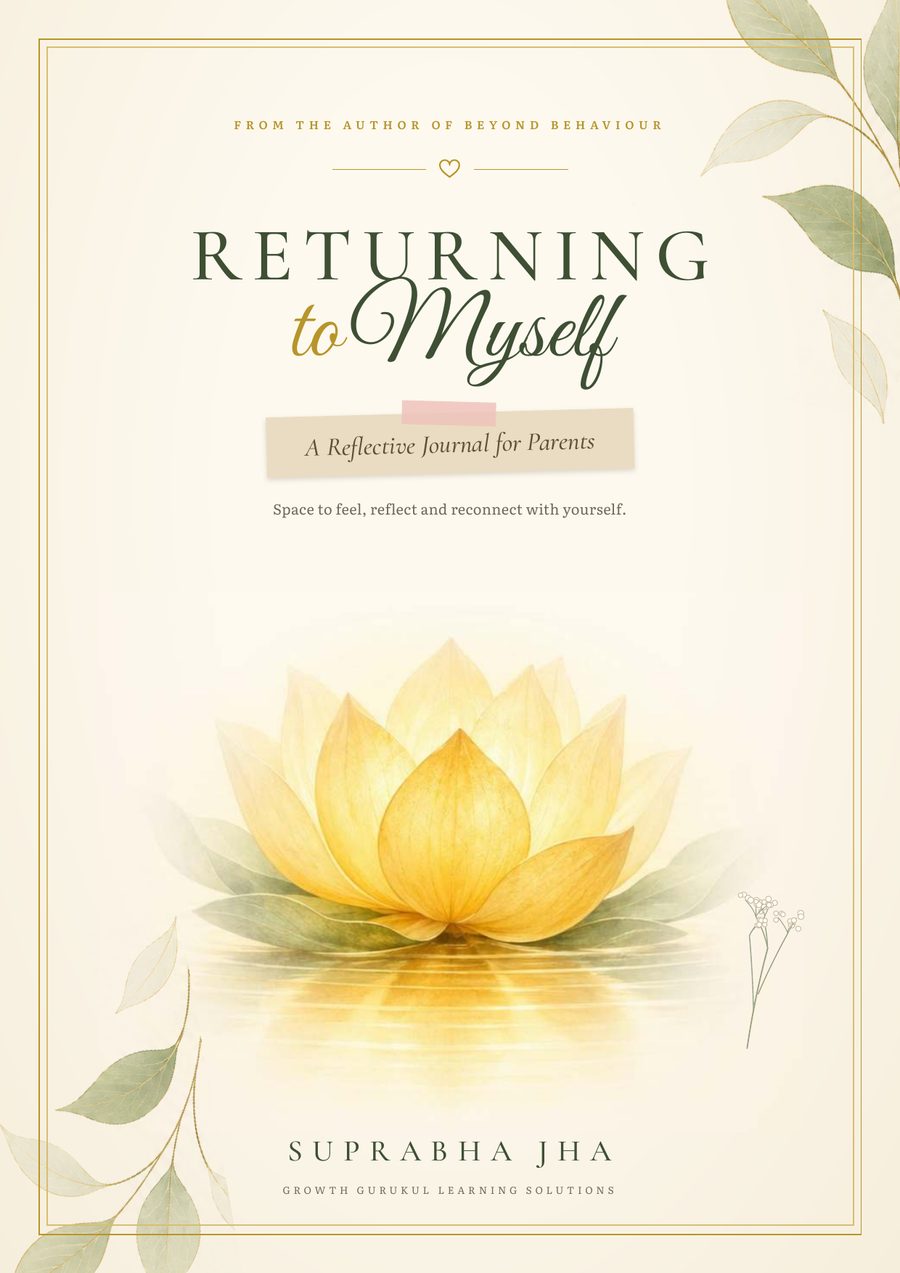
Returning to Myself journal coverOptional at checkout: Returning to Myself, a reflective journal for you, $4.99. Added only if you tick it.

Our file promise. If a file is damaged or won't open, we send a fresh copy. As these are instant digital downloads, all sales are final.

Is it for you?

Honest about who this book is for.

It's for you if

  • You're tired of saying the same thing five times a day
  • You want boundaries without shouting or shaming
  • You want to pass on values as meaning, not just rules
  • You're open to an old idea, if it's practical

It's not for you if

  • You want a sticker chart that works by Friday
  • You're looking for a diagnosis or therapy. Please see a qualified professional.
  • You want a printed paperback. This is the digital edition.

Questions

Before you order.

What exactly do I get, and how?

The book (PDF and ePub), the Practices toolkit (print PDF, fillable PDF and ePub) and three bonuses: two guided audios, a mandala colouring set and a printable card game. Everything arrives by email within minutes of payment, in any country.

Do I need to be Indian, or Hindu?

No. The book draws on an Indian idea, but it is about children, and children everywhere have bodies, moods, inner worlds and choices. Examples come from everyday family life.

Is it religious? I don't know Sanskrit.

The book uses Panchakosha as a whole-person way of looking at a child. No ritual or belief is asked of you, and every Sanskrit word is explained in plain English, with a full glossary.

Isn't this just gentle parenting with new words?

No. You still say no, hold consequences, expect repair and ask for responsibility. The difference is that correction stops being the only tool you have.

Can I buy from the US, UK or Australia?

Yes. The international edition is US$9.99, charged in US dollars, and the files are digital, so they reach any inbox within minutes. If your card does not go through at checkout, WhatsApp us on +91 92177 06551 and we will help you complete the order.

My child is 4 (or 14). Is it right for us?

It is written for parents of children from about 4 to 16, with examples from little ones' meltdowns to teenagers' choices. The way of seeing works at every age; the tools adapt.

Can I get a refund?

Because these are instant digital downloads, all sales are final. If a file is damaged or won't open, write to us and we'll send a fresh copy.

Does this replace a doctor or counsellor?

No. The book is educational. For concerns about your child's health, development or safety, please see a qualified professional.

The question underneath all of it

“One day, the most important parenting moments will happen in rooms we are not in.”

Chapter 14 · Your Voice Will Not Always Be Available
A classroom in TexasA sleepover in LeedsA cricket club in MelbourneA tuition class in Pune

What travels with your child when you can't?

Get the book · $9.99

Instant downloadToolkit + 3 bonuses freeAny country

Book + toolkit + 3 bonuses$9.99 · instant download

Get the book